

On this page
Prepare the source and define the result
Crop, rotate and select the matching language. Decide whether editing or visual appearance is the priority before choosing output style.
Set acceptance criteria before processing: expected pages or records, languages, critical fields and destination format.
Use a reviewable OCR workflow
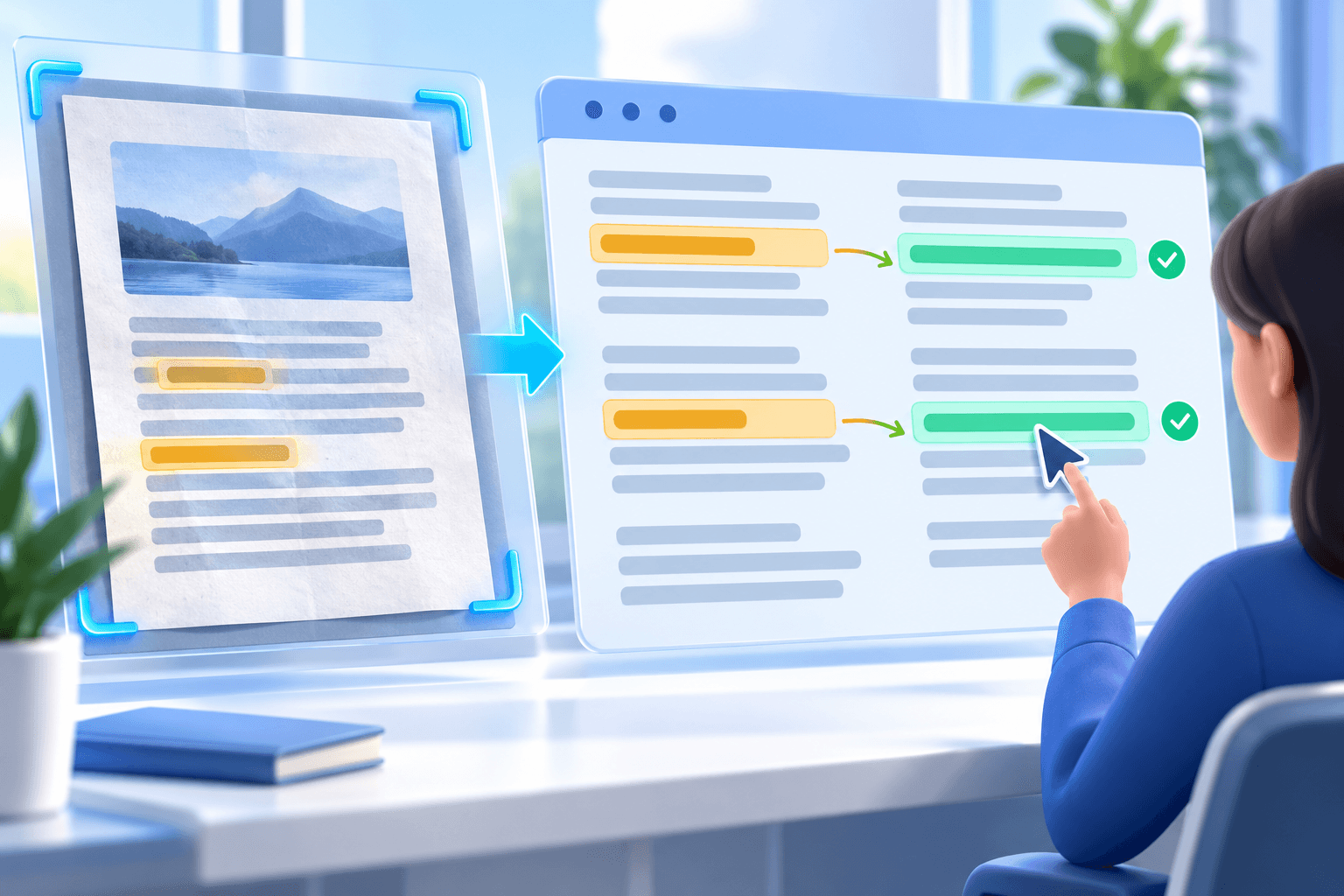
Repair headings, lists and line breaks beside the source. Build real paragraphs and styles rather than embedding all content as one image.
Keep recognition evidence beside the source. Confidence prioritizes review but does not guarantee a word or number.
Verify before using the output
Open the DOCX, edit a sentence and check order, direction and special characters. Compare names, dates and numbers with the image.
Keep the original until the reviewed derivative is accepted. Valid structure does not prove semantic accuracy.
- Complex columns and handwriting may need manual work.
- A valid DOCX does not prove OCR accuracy.
Put the workflow into practice
Arrange source documents, select the pages you need, and create one PDF locally in your browser. Review the result before choosing any optional next step.
Try Image to WordFrequently asked questions
Clear answers before you merge
Is Image to Word always exact?
No. Accuracy depends on source quality, language, layout and review.
Should I keep the original?
Yes. Keep it until the reviewed output is accepted.
What improves OCR accuracy?
Sharp upright input, correct language selection, restrained cleanup and focused review.
How should I verify the result?
Reopen it, test its intended function and compare critical content with the source.