On this page
Choose the right field type
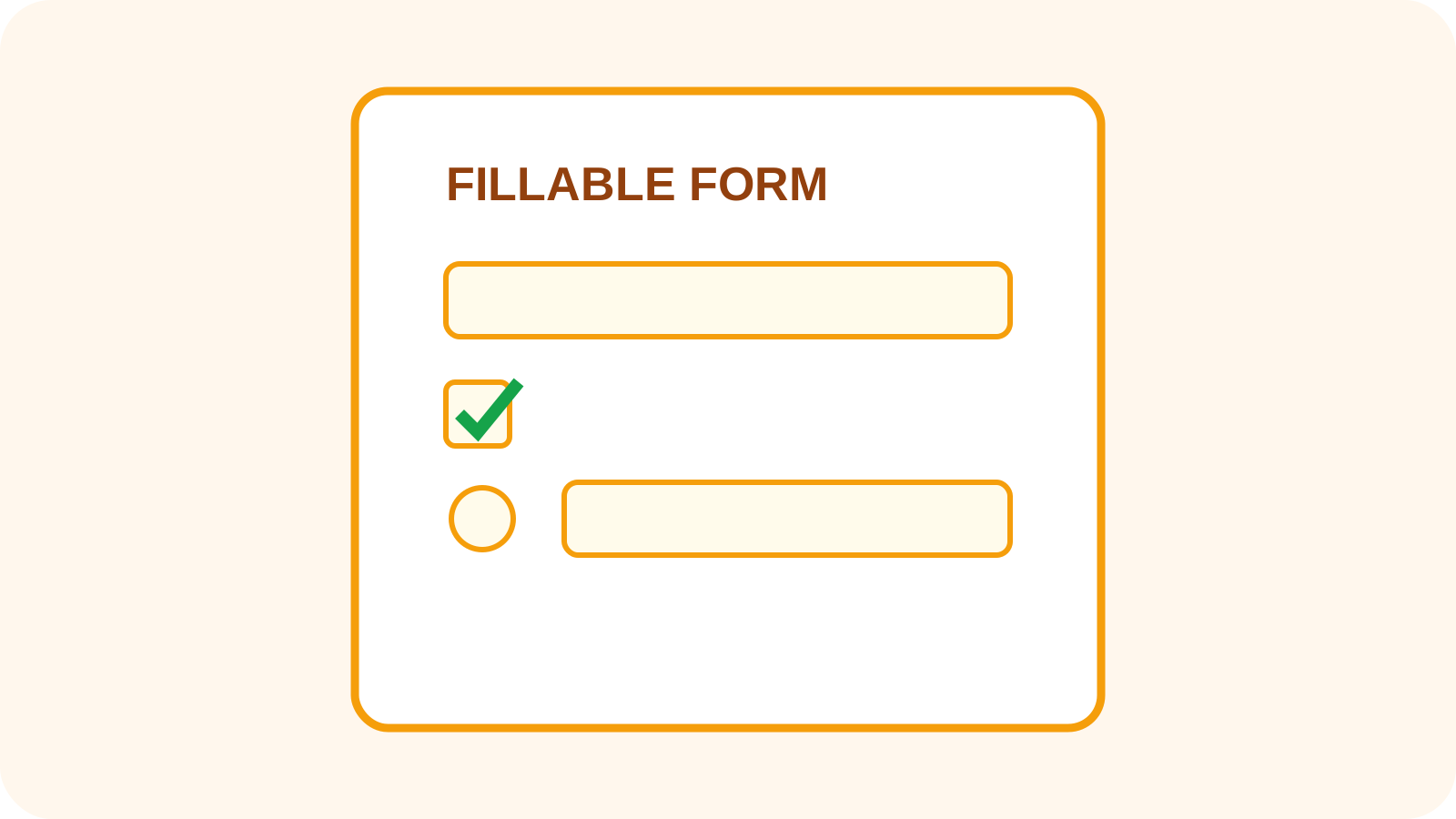
Use text fields for free responses, checkboxes for independent choices, radio buttons for one choice in a group and dropdowns for constrained lists. Multiline fields need enough visible space.
A date may be a formatted text field rather than a calendar widget. State the expected format instead of assuming every viewer supports scripts.
Field names are part of the data model
Give fields unique, descriptive names. Accidental duplicates create surprising behavior and ambiguous exported data. Mark inputs required only when the workflow cannot proceed without them.
Avoid collecting unnecessary sensitive information and explain why requested data is needed.
Design multi-page forms for continuity
Keep labels near fields, repeat essential context and maintain logical tab order across pages. Test radio groups, defaults, dropdown options and fields near edges.
Reopen the exported PDF, complete a test response and save it. Viewer compatibility should be demonstrated rather than assumed.
Accessibility and flattening need deliberate choices
Keyboard users need predictable focus and useful names. Instructions should not rely on color or placeholder text alone. Full PDF accessibility can require tagging beyond field placement.
Flatten only when interactivity is no longer needed. Keep the fillable template and test that values remain visible in the fixed copy.
- Use meaningful names
- Provide visible instructions
- Check focus order
- Test required states
- Verify a saved response
Put the workflow into practice
Arrange source documents, select the pages you need, and create one PDF locally in your browser. Review the result before choosing any optional next step.
Try Create Fillable PDFFrequently asked questions
Clear answers before you merge
Are fields different from drawn boxes?
Yes. Real fields store names, values and interaction behavior.
Can forms span multiple pages?
Yes, but tab order and labels need cross-page testing.
Should every field be required?
No. Require only essential information.
What does flattening do?
It creates a fixed copy without normal field interaction.